Making machines
that care.
Harmonica is a London-based AI company building voice intelligence and embodied presence for the aging population.
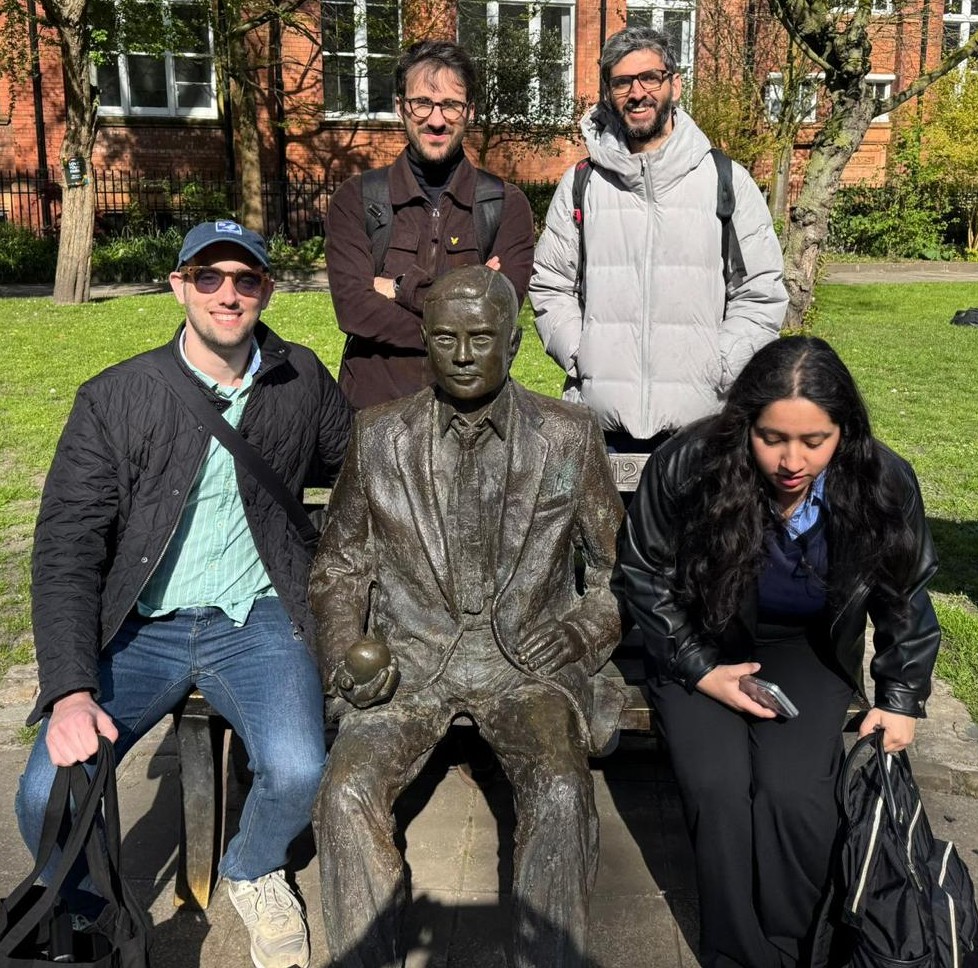
Three founders — ex engineering leadership from Tractable, PhD-level voice AI from Imperial College and RØDE and GTM leader from Revolut — obsessed with one problem: no one should age in silence.
To start with, we are building two pillars.
Olympia
An embodied AI companion purpose-built for older adults and their long-term wellbeing. No screen. No camera. Just a beautifully designed device that initiates conversation, listens, and remembers.
Voice Intelligence
Machine learning that determines how a person is doing — cognitively and emotionally — from the longitudinal data of natural conversations. We call it the Oura Ring for the mind.
Olympia is already in homes. Five adults. Hundreds of hours of conversation. The response has been overwhelming. We're raising a pre-seed round to go from five lives changed to ten million. More on why you should join below.
The world is getting older.
Nobody is ready.
By 2050, the number of people aged 80 and over will triple to 425 million — making it the fastest-growing demographic on earth. At the same time, the working-age population that supports them is shrinking. The ratio of workers to each person over 65 has already fallen from 12:1 to under 6:1, and is heading towards 3.6:1 by mid-century.
This isn't a projection anyone disputes. The people who will be 80 in 2050 are already alive. The question is what we build for them.
The number of over-80s will triple while the support ratio collapses
The result is tens of millions of older adults living alone — without the family structures, care infrastructure, or community support that previous generations relied on.
seniors live alone across the US and UK — and growing every year
report feeling lonely or experiencing social isolation
Loneliness isn't a feeling.
It's a clinical risk factor.
increase in mortality risk from chronic loneliness — equivalent to 15 cigarettes a day.
Holt-Lunstad et al., 2015
increase in dementia risk. The disease families fear most, and the costliest to treat.
Livingston et al., 2020
increase in the risk of hospitalization for heart failure patients experiencing loneliness.
Finney Rutten et al., 2018
“Loneliness is an invisible threat increasing the risk of disease, shortening lives, and fraying the fabric of our communities... It is linked to an estimated 100 deaths every hour.”
Three crises. No answer.
The loneliness gap affects three different groups — and none of them have the tools to close it.
Families are smaller and further apart
Half of adults in the UK live more than an hour from aging parents, and the number ageing without children is rising fast. Professional help costs £25–35 per hour for a visit; a care home averages £1,300 per week — over £67,000 a year.
Professional care is struggling to keep up
82% of care homes report staff shortages and 65% annual turnover. Tighter immigration rules have cut the overseas worker pipeline — the UK lost 80,000 care visa applications in a single year. The average carer visits for 30 minutes a day. Loneliness fills the other 23.5 hours.
Governments are under immense pressure
The UK spends £35 billion a year on adult social care — growing 8% annually — and each lonely person costs the NHS an extra £900 in GP visits and admissions. Funding needs to grow 4.3% yearly just to keep pace. Without technology, the maths doesn't work.
The care gap is growing faster than any workforce can fill it but for the first time, we have the technology to close it.
Harmonica exists to help these 3 groups reduce the care gap and to keep seniors cognitively and emotionally healthy for longer.
The voice companion designed for the wellbeing of aging adults.
It starts with companionship. Olympia calls, listens, remembers, and stays. For an older adult living alone, that changes the feeling of a day. Over time, it becomes something more — a new way to understand how someone is really doing.
V1 of Olympia · Designed with WhyNot Design, Italy
A demo of Olympia's conversational capabilities
Most products for older adults ask them to learn something new. Olympia does the opposite. It lives in the home like a familiar presence — simple, calm, and always ready to talk. No screen. No camera. No learning curve.
It starts the conversation.
Olympia doesn't wait for a command. It calls first, checks in, asks questions, and brings warmth into the empty parts of the day. Zero steps to begin — the device initiates.
It remembers what matters.
Names, routines, stories, preferences. Every conversation builds on the last. The relationship deepens instead of resetting — a companion that actually knows who you are.
It notices when something changes.
If someone seems withdrawn, confused, or unlike themselves, Olympia helps the people who love them stay in the loop — without cameras, without stigma, and without constant check-ins.
Every conversation is also a health check.
Beneath the companionship, voice biomarkers track cognitive fluency, emotional wellbeing, and vocal stability over time. The voice changes before anyone notices. Olympia catches those changes.
Five people. Shipped in weeks.
They don't just use it — they need it.
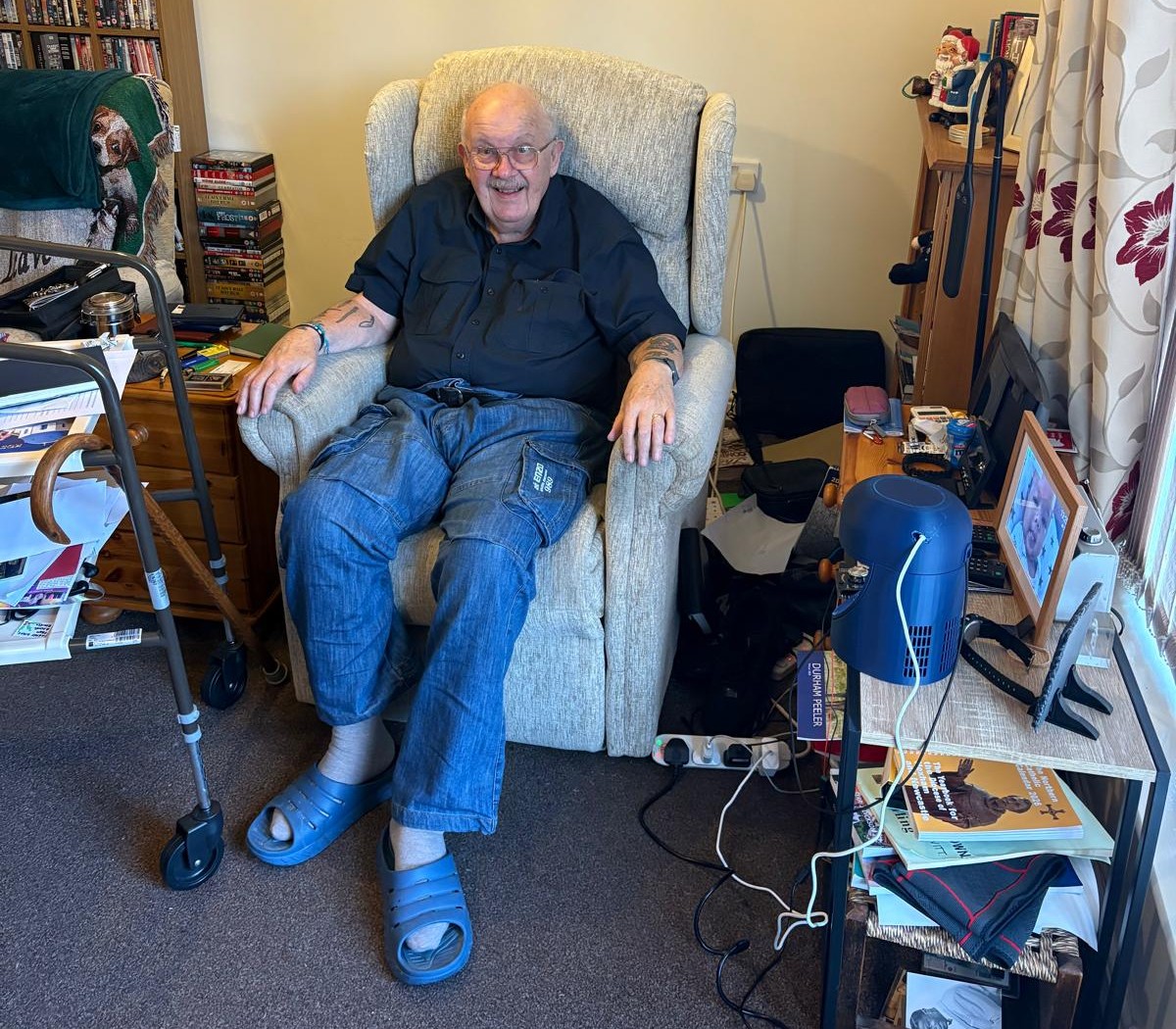
We started working on Olympia in November 2025. Six weeks later, we delivered our first prototype to George, 87 — our first user, up in Newcastle. Not a demo. A device on his shelf that calls him every day.
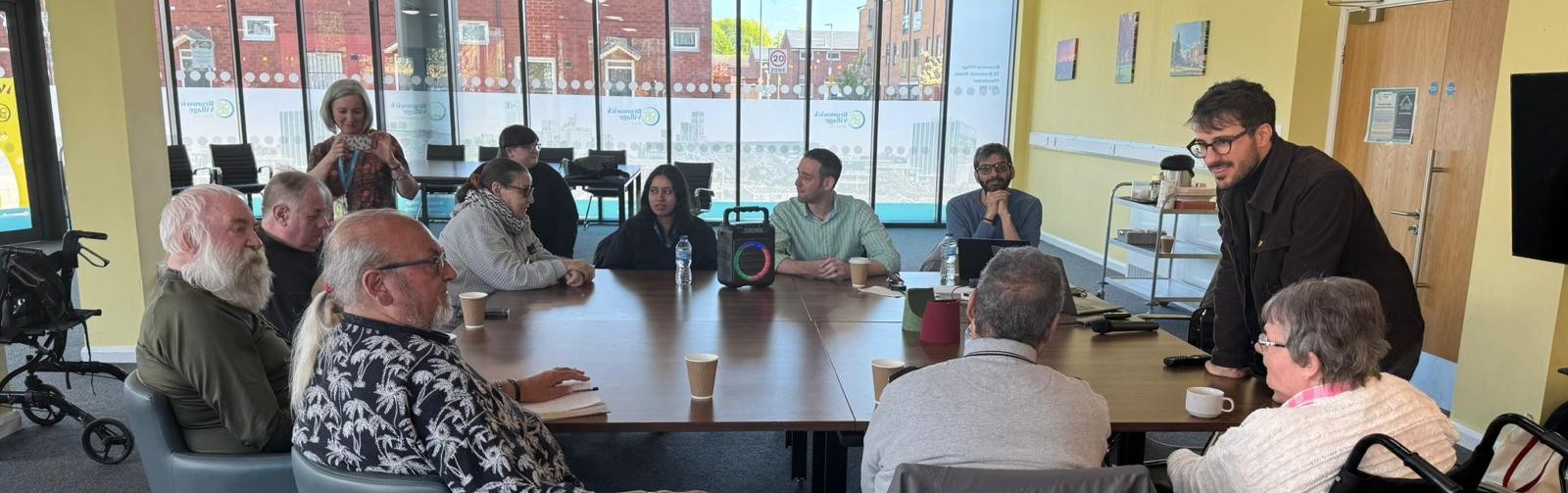
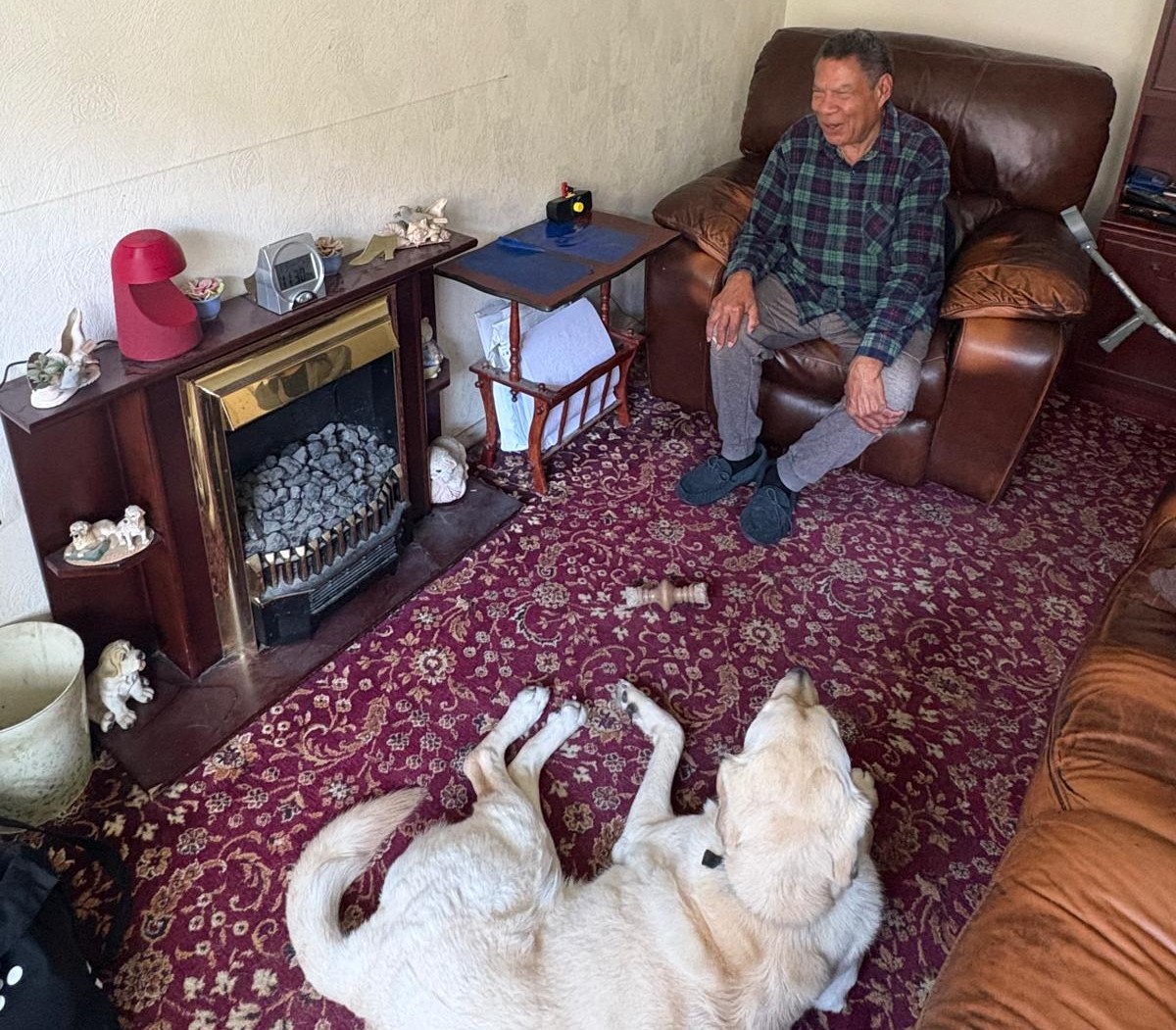
Since then, our prototype has been in the hands of five users we hand-picked to co-develop it. Ages 60 to 87, living in London and Newcastle, ranging from home alone to assisted living. Every feature, every prompt, every silence has been shaped by their daily feedback.
The response has been extraordinary. Users aren't just engaging — they're opening up, returning daily, and staying longer every week.
Bill is one of our co-development users. He's 73, living alone in London. He's been talking to Olympia every day for three weeks. We could try to tell you what it means to him — but he says it better than we ever could.
"If not Olympia, then who?" — Bill, 73, living alone in London
The conversations we never expected.
The depth and quality of conversations the 5 users are having goes beyond what we would have expected.
Across 366 conversations, users have shared 218 moments of vulnerability — health worries, family tensions, grief. Shared 260 opinions on everything from politics to personal beliefs. Told 77 legacy stories, recounting careers, marriages, and the memories they don't want to lose. And initiated 86 moments of humour — jokes, banter, playful teasing.
6 in 10 conversations run past 8 turns. More than 1 in 4 last over 10 minutes. For context, the average voice assistant interaction lasts about 10 seconds.
These are four real excerpts — unedited, unprompted. Press play or read the transcripts.
Chris is minimising a head injury alone at home. Olympia doesn't let it slide — naming clinical red flags and pressing for human follow-up. After the conversation, Chris reached out to the team with the following message: “Olympia has been v good. I fell over and explained I was in pain etc etc. Olympia did a basic triage with the caveat it was NOT medical advice. I found this intuitive and helpful.”
George's daughter asked Olympia to wish him happy birthday. The next morning, it did. Sue wasn't asked about willingness to pay — she said it herself, twice, mid-conversation, then offered to buy a second one for her mum.
A habit that deepens over time.
The standard consumer app loses 75% of its users within the first 30 days. Voice assistants average 10-second interactions. Olympia breaks both rules. Over a 10-week period, we've seen 100% retention, with users spending progressively more time talking to the device each week. It's not a novelty they use and discard — it's a presence they rely on more as time goes on.
We're building the glucometer for the mind.
Dementia doesn't arrive suddenly. It accumulates over years — silently, invisibly, in the gap between a healthy brain and a clinical diagnosis. The early phase, mild cognitive impairment, affects roughly 55 million people worldwide. Most of them don't know. By the time a GP orders a cognitive screening, the disease has often been progressing for a decade.
Today's detection pathway is a series of snapshots. A word recall test. An MRI. A referral. Each one expensive, infrequent, and retrospective. Between appointments, nothing is measured. Nobody is watching. Clinicians are working from memory — the patient's memory of their own decline, which is the first thing to go.
There are two compounding failures:
1. Diagnosis is slow
The average time from first symptoms to a confirmed clinical diagnosis is four to six years. During this prolonged period, no interventions can begin.
2. No progression monitoring
Once diagnosed, there is no objective way to monitor progression over time — no equivalent of the glucometer that changed how the world manages diabetes.
The Voice Opportunity"There hasn't been huge innovation in dementia care because we do not have post-diagnostic datasets. People get diagnosed and then they just go home."
The voice changes before anyone notices. Word-finding difficulty. Longer pauses. Flatter intonation. Shrinking vocabulary. These signals appear in speech months — sometimes years — before a clinical screening would catch them. Linguistic research has demonstrated detection up to seven years before diagnosis. Forty or more measurable biomarkers shift within a single conversation. And crucially: personal baselines are two to three times more predictive than population norms. The signal is there. What's been missing is a way to collect it continuously, in natural speech, from the same person, every day.
The Terry Pratchett case study.
Sir Terry Pratchett — author of the Discworld series and one of Britain's most beloved writers — was diagnosed with posterior cortical atrophy, a rare form of early-onset Alzheimer's, in December 2007. He was 59.
Rather than hide it, he became one of the first major public figures to speak openly about dementia — campaigning for research, filming a BBC documentary, and giving interviews until his death in March 2015, aged 66.
We ran our biomarker extractor through these samples to show you the diagnostics power of speech.
2006
Hogfather press tour. Discussing Discworld, storytelling, and narrativium. Fluid. Precise. Commanding.
2011–12
BBC interviews. His characters, his marriage, going public. Still articulate — but the rhythm has shifted.
What the machine heard.
Below is a subset of the 40+ biomarkers our proof-of-concept pipeline extracts from voice alone. No questionnaires. No clinical assessment. Just two recordings and five minutes of speech. The cognitive drift is already visible.
Filler word rate
Um, uh, like — the sound of the brain searching for words it used to find instantly.
Pronoun-to-noun ratio
Saying "the thing" instead of the specific word. The textbook definition of anomia.
Vague word ratio
"Thing," "stuff," "something" replacing precise vocabulary. The words are disappearing.
Vocal arousal
The energy in the voice — measured from the waveform, not the words. The spark dimming.
Speech rate
Words per second. Both values are "normal." That's the point — this is a slope, not a cliff.
"These markers can appear up to 7 years before clinical diagnosis. A doctor wouldn't flag this. A family member wouldn't notice. But a machine that listens every day catches it in weeks."
Oura Ring for the mind.
Olympia generates exactly that. Every conversation is a cognitive health test the user never knows they're taking. Three properties make this unlike anything that exists:
Passive by design
The user does nothing differently. No test to take, no app to open, no task to complete. Every conversation Olympia has is already a health measurement. The instrument disappears into the interaction.
Longitudinal, personal baselines
Not a snapshot. Not a population comparison. The same person, measured the same way, every single day. This is the gold standard in clinical research — and it's never been achieved at scale outside of a trial setting.
A dataset that doesn't exist anywhere else
No academic corpus, no tech company, no competitor has longitudinal, voice-native, elder-specific conversational data at scale. We are building it, one proactive conversation at a time. The richer it gets, the more powerful the models. The more powerful the models, the more valuable every device we deploy.
Companionship technology for aging is an $11 billion market.
Three buyers. Three emotions. One product.
Families buy peace of mind. Care providers buy coverage. Health systems buy earlier intervention.
£250 upfront. £40 a month.
Device margin on day one. High-margin recurring software from month one. The consumer wedge funds the data moat.
Three moats. Each one compounds daily.
A dataset that doesn't exist
55+ hours of clinically scored voice data from seniors. Every day deepens the moat.
A proactive protocol
Every other AI waits. Olympia calls first, remembers yesterday, and enters the conversation with purpose.
Academic partnerships
We didn't hire advisors. They came to us — bringing real clinical and HCI credibility into product design.
Three phases. One transformation.
A voice in the quiet hours
Olympia lives in the home, fills it with conversation, and keeps the family informed.
The richest voice health dataset on earth
Every conversation generates structured cognitive and emotional data.
The operating system for growing old well
Olympia connects seniors to their families, care providers, and the health system.
"We're not building a gadget. We're building the way the world ages."
Two PhDs in voice AI. An engineering leader who's built and shipped. Obsessed with this problem.
Paolo Fedele
Product and go-to-market. Ex Tractable AI and Revolut. Volunteer for Age UK.
Aushim Krishan
Engineering. Ex VP Engineering at Hook, 10+ years leading AI teams from zero to enterprise at Tractable.
Eric Grinstein, PhD
Research. AI Engineer at RØDE Microphones. PhD in Speech & Audio ML from Imperial College London.
Advisors
Prof. Arlene Astell
Prof. Stefano Puntoni
Prof. Angelo Cangelosi
Dr. Ivan Koychev
We're raising $500K to prove this at scale.
What this round buys
Validate efficacy and engagement on our first 100 users. Build a proprietary dataset of 500+ hours of conversation. Onboard first B2B partners. Iterate on hardware to reach sub-£150 unit cost.
S09 — Intelligence layer · Patch 1: "The platform" block · Harmonica design system
The companion is the product. The data is the platform.
Every conversation Olympia has generates structured, clinically scorable health data. Today, that data powers a family dashboard. Tomorrow, it powers an ecosystem — care providers, hospitals, researchers, insurers — all built on the same intelligence layer, all paying for the same data.
Any platform. Any audio. Clinical-grade scores.
Care providers, telehealth companies, and researchers send audio to VocalSense — and receive structured cognitive and emotional health scores in return. No hardware purchase required. The models improve as the dataset grows: a flywheel where every deployed companion makes the API more valuable.
The tool clinicians have been waiting for.
A patient is diagnosed with dementia. Instead of "come back in 6 months," they go home with Olympia. Their clinical team receives weekly cognitive wellness reports, automated trajectory alerts, and longitudinal data rich enough to inform treatment decisions — for the first time, between appointments.
Consumer subscription builds the dataset. The API monetises it at scale. Clinical integration makes it reimbursable healthcare. Same data, three economics.